
The Diamond platform: from portfolio signal to site understanding
AZM X shaped TAWAL's vision for the Diamond platform, so its teams can move from portfolio signals to the detail of each site in one journey.
The problem
TAWAL is Saudi Arabia's first TowerCo, and the information about its sites is spread across many systems and data sources. When portfolio performance shows something that needs attention, a team has to reach the site behind it and understand its status without losing the context between one system and the next.
The vision
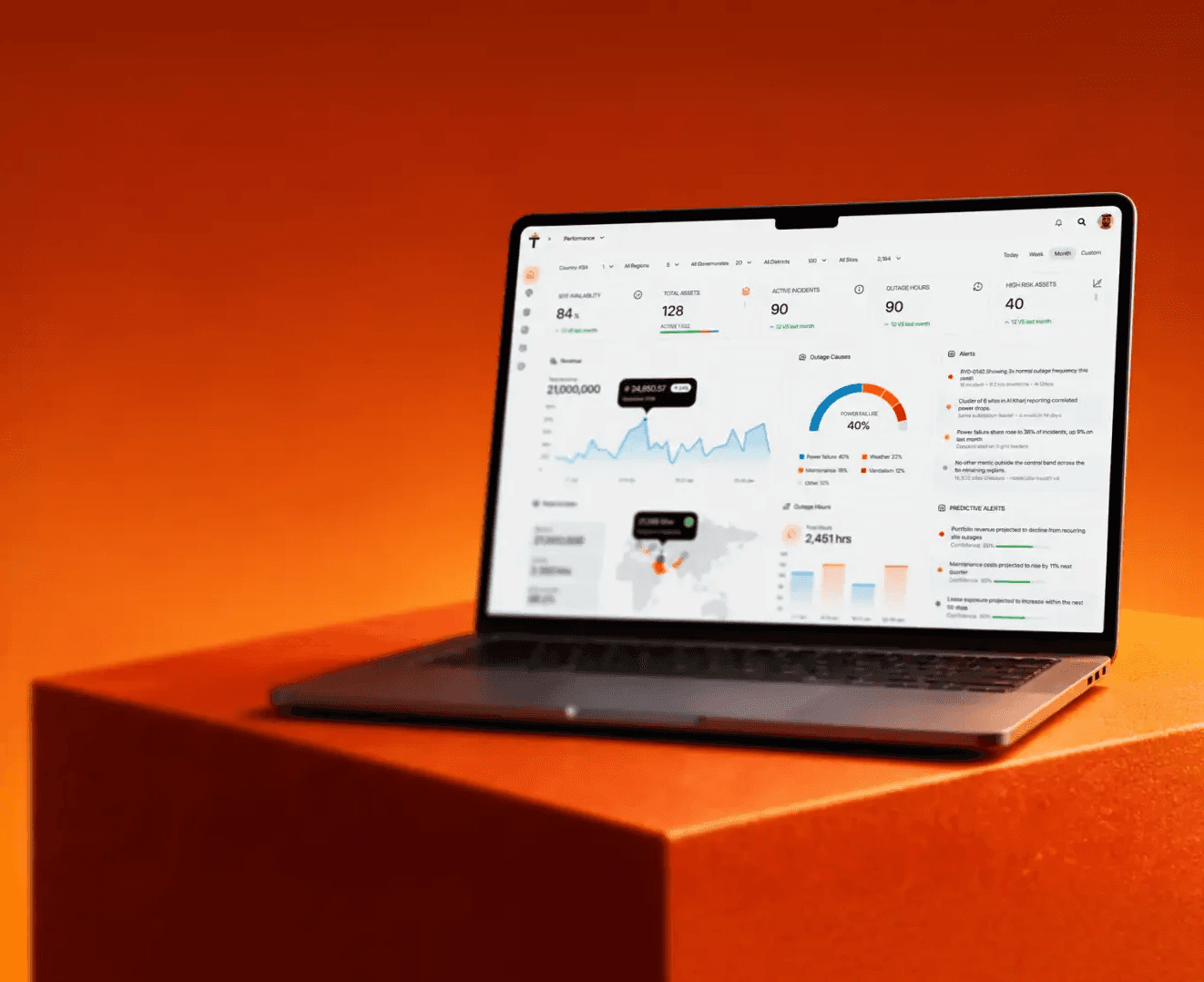
Diamond brings TAWAL's site information together around one reference: the site. The vision rests on three principles.
01
The site as the axis
Move from portfolio performance into the site context, assets, records and evidence behind it.
02
A role-aware experience
Give leadership, maintenance and leasing a starting point shaped around their responsibilities.
03
Evidence-led decisions
Keep measures, records and AI reasoning visible, so decisions begin from a shared view of the evidence.
The objectives
5 objectives for a connected site picture

The approach
Discovery first, then the experience
We grounded the POC in TAWAL's actual systems, roles and working context before defining the experience.
Listening to the business
8 stakeholder sessions across technology, operations, maintenance, leasing, design, finance and related teams.
Mapping the environment
Systems, stakeholders and the core data structure, to understand how information connects across the organisation.
Translating findings into structure
Three priority personas, user needs, the information architecture and the relationship between key views.
Exploring design directions
Three visual and experience directions, from which TAWAL selected the Light, Expressive, Approachable concept.
Building the executive POC
The direction translated into role-based dashboards, site intelligence, AI-assisted exploration and reconciliation experiences.
The solution
An investigation that keeps its context
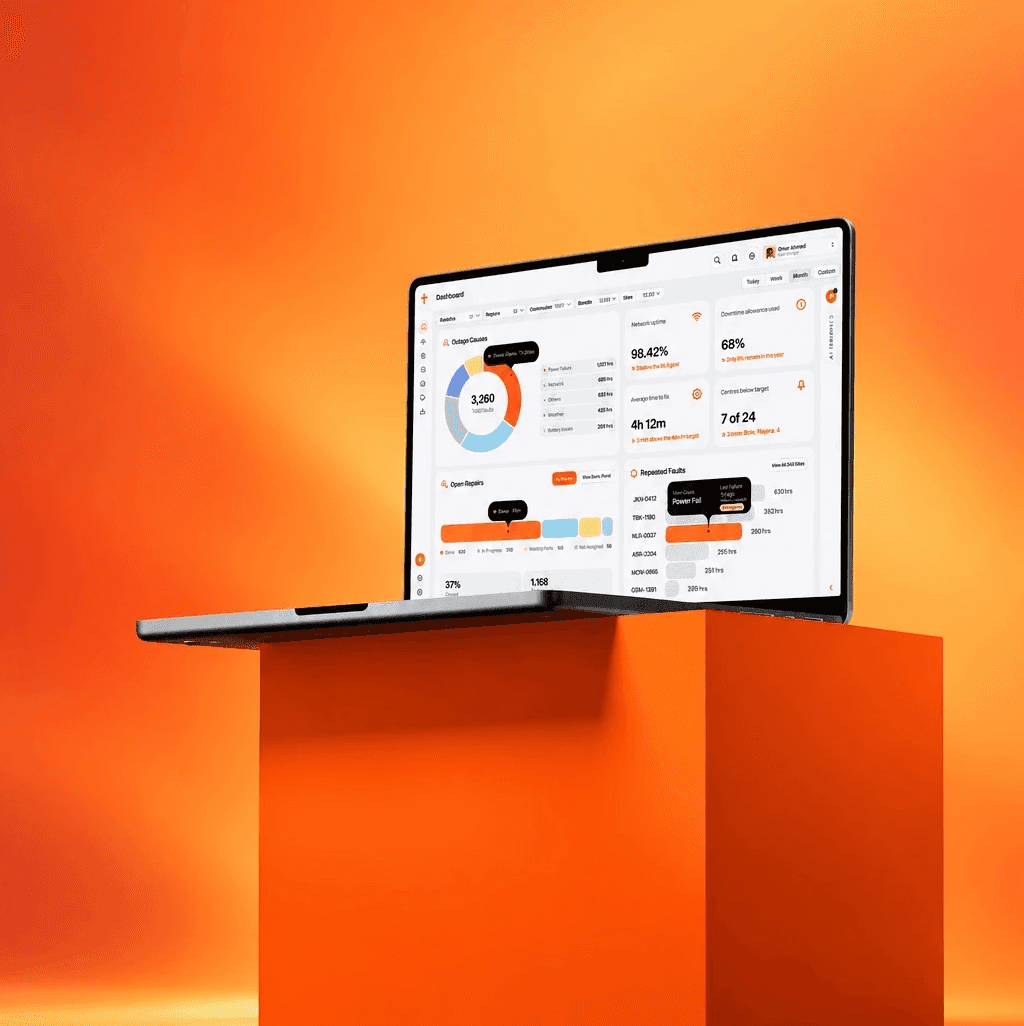
In the POC, every journey starts with what matters to the role: dashboards for leadership, maintenance and leasing bring their priorities forward. From something that needs attention, the user moves to the map, then to the site behind it, and sees its assets, operations and commercial information in one view, with progress and dependencies.
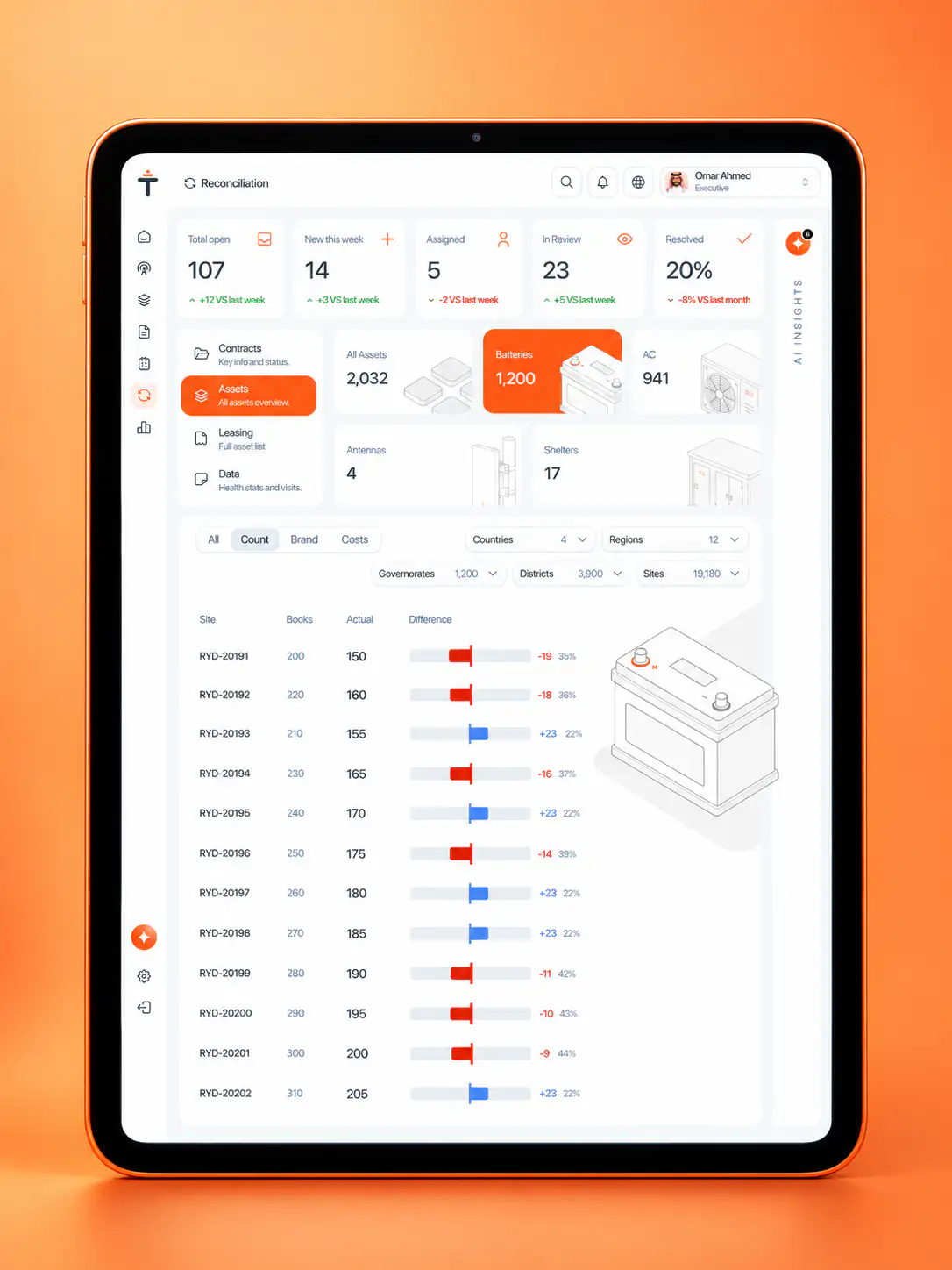
When the data shows discrepancies, reconciliation and AI-assisted exploration surface the evidence behind them and who owns the next step.
Delivery and impact
Three stages of the work, stacking as you scroll, just as the project's layers do.
05
Five guiding questions
We anchored the experience around five questions drawn directly from discovery:
Connection: how do we bring information from different systems into one coherent site view without losing the context behind each record?
Relevance: how do we give each role a different starting point while keeping everyone connected to the same underlying site information?
Trust: how do we make performance measures, AI insights and discrepancies understandable through definitions, evidence and reasoning?
Follow-up: how do we show what requires attention, who owns the next step and where the action should continue?
Investigation: how do we keep context intact as someone moves from dashboard to map, site and supporting records?
06
From portfolio signal to site understanding
The POC defined a connected investigation journey that starts with what matters to each role and progressively reveals the context behind it:
Start with what matters: role-based dashboards bring portfolio, commercial and operational priorities forward.
Identify what needs attention: changes, risks and upcoming obligations focus attention on sites that require investigation.
Move into geographic context: the map connects portfolio-level concerns with the sites behind them.
Understand the full site picture: site views bring asset, operational and commercial information together with progress and dependencies.
Explore evidence and next steps: AI-assisted exploration and reconciliation surface evidence, ownership and a path to resolution.
07
Impact by the numbers
A discovery-led POC grounded in TAWAL's systems, stakeholders and real working context:
8 stakeholder sessions.
35 systems and data sources mapped.
43 stakeholders mapped.
15 core data entities.
29 documented relationships.
25+ final concept screens.
Stakeholders mapped

The Diamond POC gives TAWAL a grounded experience direction for bringing fragmented site information into a clearer operational picture.
Handover
Handover and next steps
AZM X handed over the ecosystem, stakeholder and data structure maps, three priority personas, the information architecture, the selected experience direction, 25+ designed screens and the prototype, and the executive presentation.
The POC establishes a foundation for validating the proposed experience with real users and defining a focused pilot around a complete investigation journey.